Showing posts with label Executive Order. Show all posts

Friday, 13 October 2017

Unaffordable Healthcare

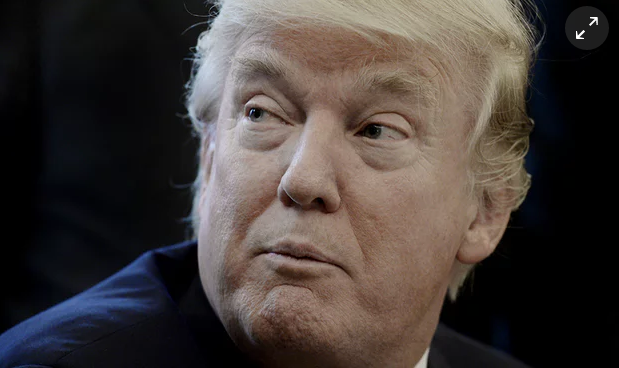
Trump’s latest Executive Order is another swipe at Obamacare, but it does not repeal or replace it.
In general, the executive order has no force of law itself. What it does do is influence how regulations are put together. It is those regulations that represent how a law is implemented and how it is enforced.  Trump’s executive order asks three federal agencies to consider possible new regulations that could help achieve certain goals, like providing more policy options for the young, allowing small business associations to provide health insurance plans that cross state lines and expanding access to short-term insurance policies, those that offer coverage for 90 days or less. It is not clear what those rules will say.
Previously Trump issued an executive order that let a broader range of employers stop offering free contraception through their healthcare plans.  It said that regulations should interpret the Supreme Court Hobby Lobby decision to enable employers who have a sincerely held moral and/or religious convictions to opt out of the free contraceptive benefit currently in their policies.  Loosely interpreted, an employer could be morally opposed to paying more for healthcare. 


Anytime a benefit is excluded from a policy, the plan costs less. If you find paying more for health insurance morally offensive, you can now opt out of providing free contraception. It is that simple.

The other thing Trump can do is use Executive Orders to curtail the activities of the executive branch of government.  This allowed Trump to use executive orders to shut down the Affordable Care Act website for 12 hours every Sunday during open enrollment, cut the budget by 40% that funds groups that help people enroll, and cut the advertising budget for the ACA from $100 million to $10 million.  Such actions make it less likely people will enroll.     In addition, his decision to limit enforcement of the ACA has wide consequences.  Knowing that the individual mandate is unlikely to be enforced and the companies will unlikely be penalized for not offering insurance makes it less likely those people will purchase expensive exchange policies.


Trump is seeking to end subsidies paid directly to health insurance companies that help low-income people.  He wants that money paid directly to the states instead.   Trump is also seeking to eliminate the exclusivity requirement that all plans be conforming to the ACA and offer the essential health benefits, such as well-care like physicals and/or preventative care like mammographies, as defined in the Affordable Care Act.

The real impact of these executive orders will be felt by the self-employed, the working poor, and the middle class.  What this means is that those who are not covered by group benefit plans, plans provided by their employer, are going to be unable to purchase health insurance.  Not because it won’t be available, that is a false premise.  They won’t be able to buy it because what will be available will be unaffordable.  This year, in California, a policy covering two adults in their 50’s and their grown child will likely cost more than $20,000, with a $10,000 deductible and copays of $70 for specialist visits.   Because of the exodus of young people into lower costs products that will likely result from the implementation of the executive order, the increase in the cost of this same policy could be up to 40% or more.  What family can afford $42,000 in payments before the insurance company contributes their first dollar?

It should be noted that the states, not the federal government, set policy prices.  Policy prices for 2018 have been set.  At this point, states are not authorizing new policy types or increases in costs to offset the uncertainty.   What happens in 2019, at this point, is unknown.  In California, is an insurance company pulls out of the state, they have to wait 3 years to come back in.  Insurance commissioners can stop the exodus of insurance companies by either making them be all in or all out.  We will have to wait and see if more carriers pull out and if state insurance commissioners hold the line on cost.

Remember, State Insurance Commissioners are politicians and subject to influence.  If you are angry, this is the place where your voice can be heard.  


Minda Wilson


Follow me Minda Wilson on:

Sunday, 22 January 2017

Trump's Executive Order Could Dismantle Parts Of ACA Before Replacement Is Ready Minda Wilson responds

Trump's Executive Order Could Dismantle Parts Of ACA 

Before Replacement Is Ready


President Donald Trump, fulfilling a campaign promise to start to repeal Obamacare on Day 1, signed an order directing federal agencies to waive enforcement of large swaths of the law.


The one-page order allows the head of the Department of Health and Human Services or any other agency with authority under the law, not to enforce regulations that impose a financial burden on a state, company or individual.
It's so broad it could allow many of the law's provisions, including many of taxes it imposes on insurers and the requirement that individuals buy insurance, to die from lack of enforcement.
The order is an important political act for Trump, who pledged throughout his campaign that he would act quickly to roll back the health care law. Its reach, however, depends upon exactly which provisions he decides to target.
The order comes as Trump's pick to lead the Department of Health and Human Services, Rep. Tom Price, R-Ga., is awaiting his confirmation hearing and vote, which could come within days or weeks.
It's unclear how much of this order could be carried out before Price, if he's confirmed, is installed at HHS.
Trump's order also pushes one of his favorite health care ideas — to allow insurance companies to sell policies across state lines — by encouraging "the development of a free and open market in interstate commerce for the offering of healthcare services and health insurance, with the goal of achieving and preserving maximum options for patients and consumers."
It lands just as members of Congress are working to repeal and replace the Affordable Care Act.
Trump and Republican lawmakers have promised that any repeal would be followed immediately by a replacement for the law and they've said that anyone who has insurance through the ACA will not lose it in the transition.
"While President Trump may have promised a smooth transition, the Executive Order does the opposite, threatening disruption for health providers and patients," said Leslie Dach, director of the Protect our Care Coalition, a group of organizations trying to save the Affordable Care Act.
Health policy analysts have warned that repealing the unpopular parts of the law such as the taxes or individual mandate could lead to the collapse of the individual health insurance market. This executive order could allow those provisions to be rolled back before a replacement bill is ready.
Republicans in Congress have laid out a number of broad road maps for a new health care law but have yet to reveal a specific bill that would show how many people will get insurance coverage or how much it might cost.
Here are my thoughts on this:-
"This is good news.  Local hospitals have been closing in droves.  If things continued on their current course 20% of hospitals are expected to close by 2020.  The reason is that administrative costs made the operating at a profit prohibited.  For most hospitals one in every three dollars they receive in revenue is spent on administrative costs.  It used to be one in every four.  The elimination of these administrative costs could mean the difference between your local hospital closing or keeping its doors open."

Author of Urgent Care

Urgent Care is available on amazon  click here, purchase a copy of Urgent Care today

Follow me Minda Wilson on: